A slab leak is a leak in a water line or drain that runs under or inside the concrete foundation, and it is common in Tampa because most homes are built slab-on-grade. Warm spots on the floor, the sound of running water with every fixture off, or a rising water bill are typical signs. Call the number on this page to be connected with a local plumber in Tampa.
Why slab leaks happen in Tampa Bay
Most homes around Tampa sit on a concrete slab rather than over a basement or crawlspace, so supply lines and drains often run through or beneath the foundation. Over decades, pipes can corrode, rub against gravel, or fail at a joint. Older neighborhoods such as Ybor City, Hyde Park and Seminole Heights have pre-1940 homes, and about 44% of the homes in the city were built before 1980. Galvanized steel supply lines and cast iron drains from that era are common causes of trouble under the floor.
Signs to watch for
- A warm or hot patch on a tile, wood or laminate floor, which often points to a hot water line
- The sound of water running when every fixture is off
- A water bill that rises with no change in how much you use
- Damp carpet, lifting flooring or a musty smell near an interior wall
- Low water pressure at several fixtures at once
A simple check is to turn off every tap and appliance and watch the meter at the property line. If the dial keeps moving, water is going somewhere. A leak in a drain line under the slab may show up differently, as slow drains or damp spots without any pressure change.
How a plumber finds and fixes it
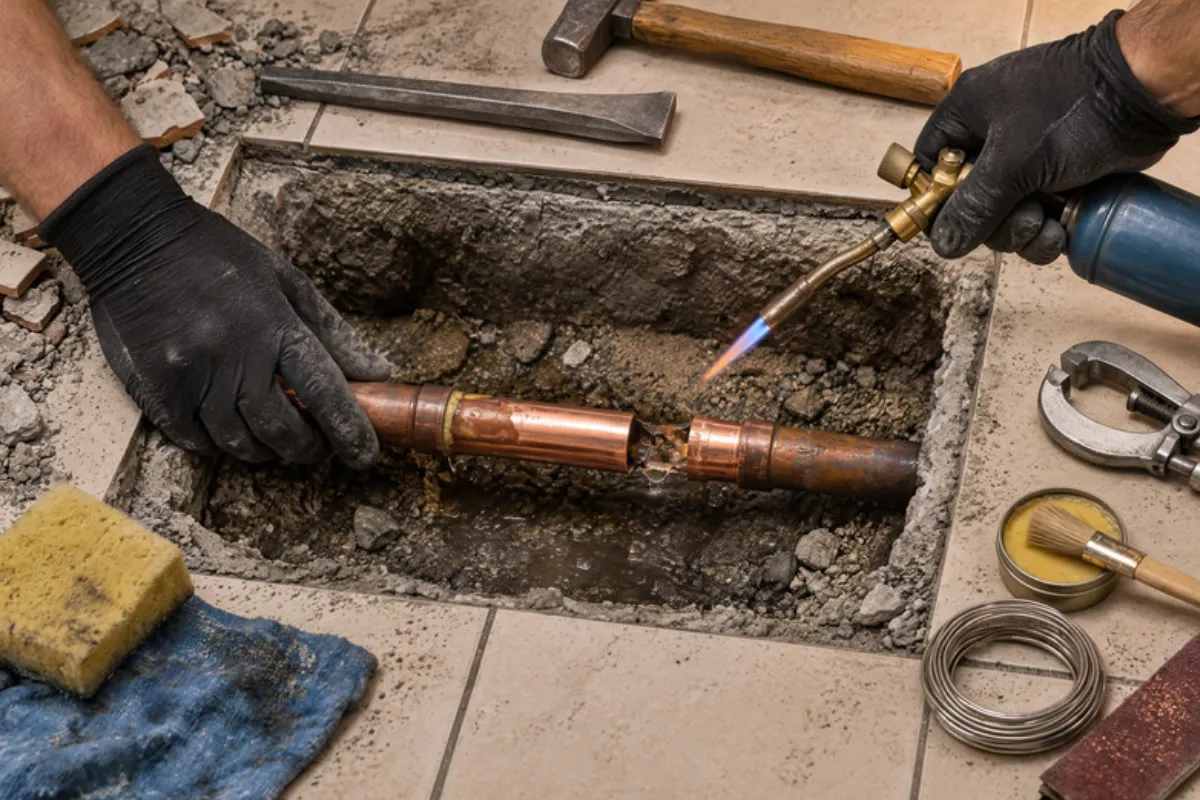
Locating the leak comes first. A plumber may use acoustic listening equipment, pressure testing of the lines, or thermal and camera tools to narrow down where the water is escaping. Once the spot is known, the usual options are opening the slab directly over the leak, rerouting the line through the walls or attic, or replacing the affected run entirely. Rerouting avoids breaking concrete, but the best choice depends on how many leaks the pipe has had and what it is made of.
Cost factors
Price depends on how deep and how accessible the pipe is, the flooring that has to come up, whether a reroute or a spot repair makes sense, and how much water damage needs attention. Ask for the scope and price in writing before work starts. If a hot-water line keeps failing, replacement of that run is often worth discussing rather than repeating spot repairs.
Sinking floors and cracked walls
A plumbing leak is not the same as a sinkhole, but Florida sits on carbonate rock and some areas with limestone near the surface carry higher sinkhole risk. If walls are cracking or the building seems to be sinking, stay out of it and contact your insurance adjuster before anything else.
Who handles what
The City of Tampa owns the curb stop, and the meter box sits at the property line. A leak between the meter box and the house is on the private side and is a job for a plumber. Plumber Tampa is a referral service, not a plumbing company: you call, and the call is routed to an independent local plumber. You can check a plumbing contractor's state certification through the Florida DBPR Verify a Licensee search.
Slab Leak Repair questions from Tampa homeowners
How do I know if I have a slab leak?
Do I have to break the concrete to fix a slab leak?
Is a slab leak covered by homeowners insurance?
Should I turn the water off if I suspect a slab leak?
Related plumbing services in Tampa
Helpful guides
Slab Leak Repair in nearby cities and towns
Hillsborough County
Pinellas County
Pasco County
Hernando County
Polk County
Manatee County
Sources
Last updated: